LEGGIC TYPES
Seamless Leggings: What “Seamless” Actually Means
Seamless leggings reduce conventional cut-and-sew seams, often through circular or engineered knitting. The term does not mean literally seam-free, and it is not the same as simply removing the front seam.
Reviewed 2026-09-15
Seamless leggings reduce conventional cut-and-sew seams, often through circular or engineered knitting. The term does not mean literally seam-free, and it is not the same as simply removing the front seam.
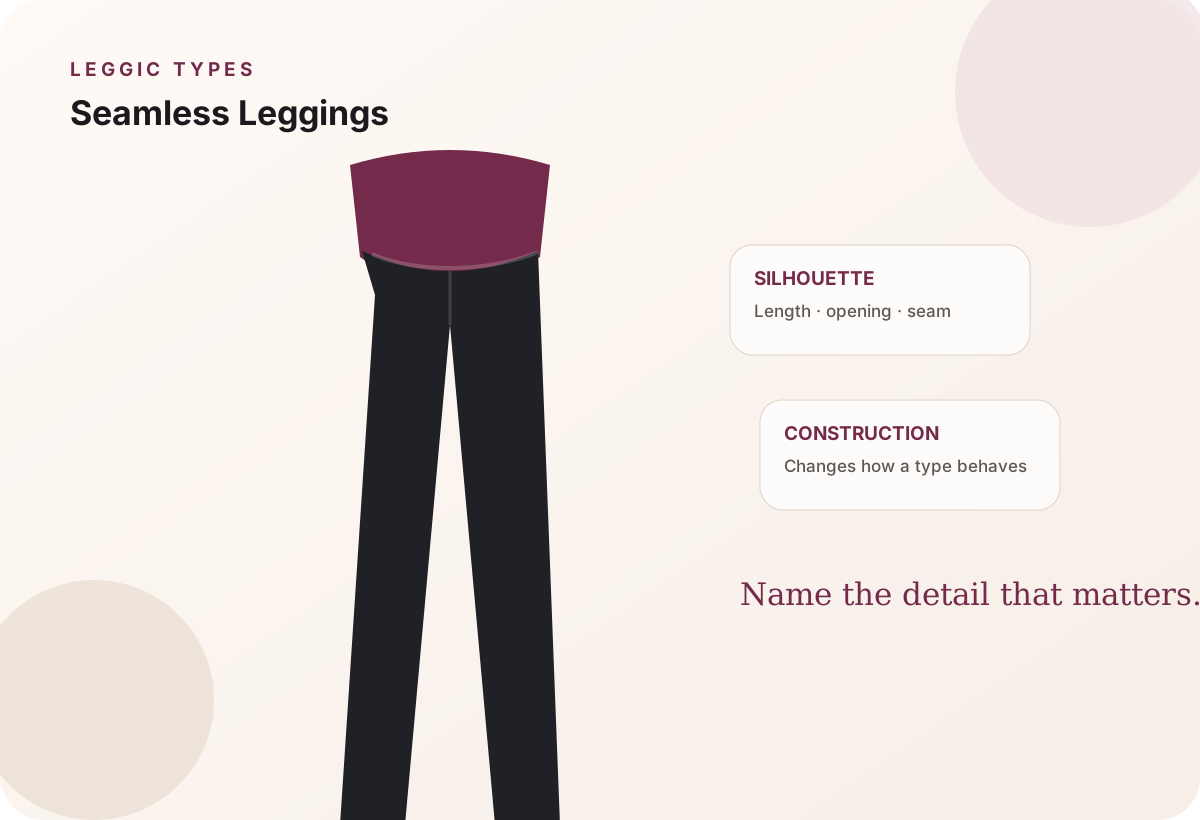
What matters
- Seamless is mainly a construction method, not a promise that no seam exists anywhere on the garment.
- Engineered knit zones can change stretch, ventilation, texture and perceived support within one garment.
- No front seam and seamless can overlap, but neither term guarantees the other.
- Judge movement, pressure, opacity and recovery on the finished garment rather than treating “seamless” as a quality grade.
Why seamless leggings can feel different
Traditional leggings are usually assembled from cut fabric panels. Seamless construction can knit much of the garment closer to its final shape, reducing the number or bulk of conventional seams and allowing different knit structures to be placed in different zones.
That can create useful variation around the waistband, thighs or ventilation areas, but it also means the fit depends heavily on engineered knit tension. A zone that feels supportive on one body can feel restrictive or misplaced on another.
Seamless vs no front seam
- Seamless: describes how much of the garment is knitted or constructed without traditional panel seams.
- No front seam: describes one specific seam location that has been removed or relocated.
- A cut-and-sew legging can be no-front-seam without being seamless.
- A seamless legging can still have finishing seams and can still develop front pressure, wrinkles or migration.
What to check beyond the word seamless
- Where compression or textured knit zones actually land on your body.
- Whether the waistband stays put through sitting, walking and bending.
- Whether the knit becomes noticeably more transparent in high-stretch areas.
- Whether the crotch and inner-thigh construction rubs during repeated movement.
- How the garment recovers after wear and after laundering according to its care label.
Use this in practice
Compare the garment information you can verify — measurements, construction, care label and composition — with the way the pair actually behaves on your body. Avoid treating a single marketing term as a guarantee.