LEGGIC TYPES
Front Seam vs No-Front-Seam Leggings
A front seam helps shape the center front; a no-front-seam pattern removes that visible stitched line for a smoother panel. Neither construction is universally better — rise, gusset, fabric recovery and overall fit still decide how the garment behaves in motion.
Reviewed 2026-09-15
A front seam helps shape the center front; a no-front-seam pattern removes that visible stitched line for a smoother panel. Neither construction is universally better — rise, gusset, fabric recovery and overall fit still decide how the garment behaves in motion.
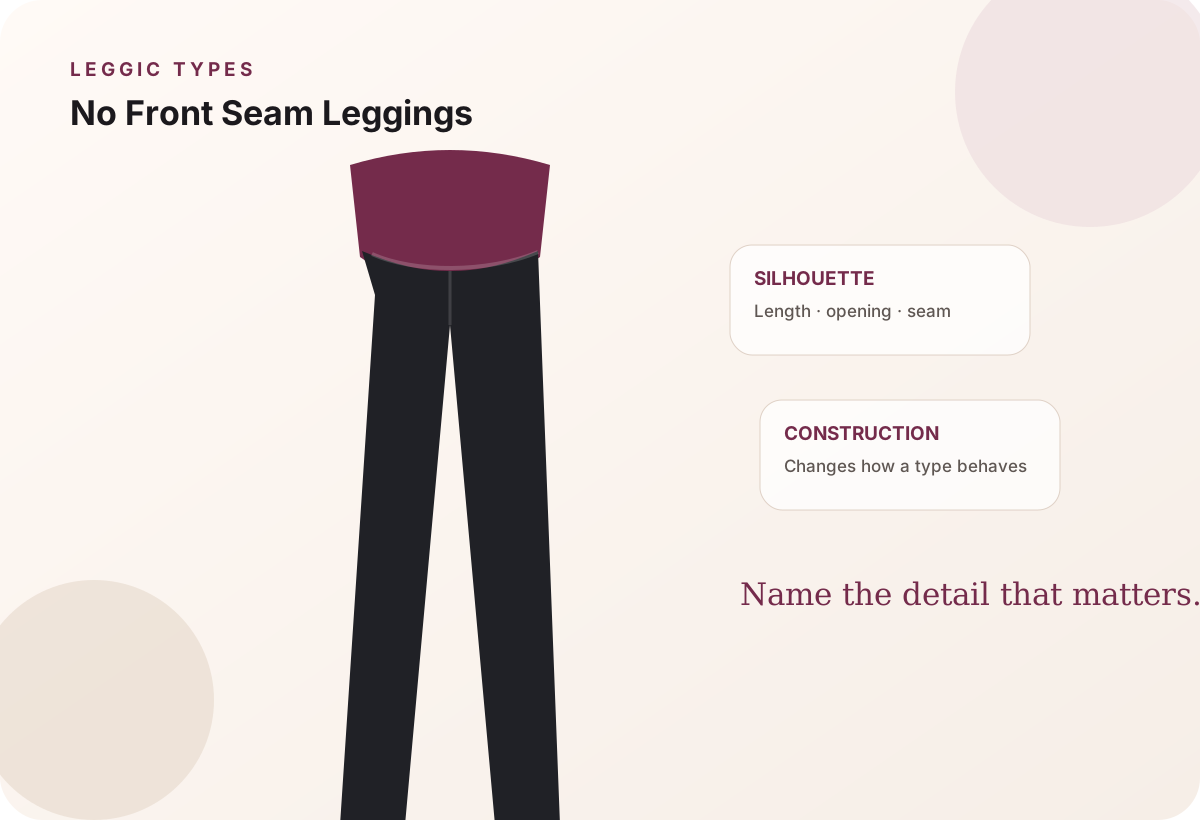
What matters
- Choose by movement and comfort, not by the assumption that one seam layout is automatically superior.
- No front seam is not the same thing as seamless: a cut-and-sew legging can have no center-front seam and still use side seams, an inseam, pockets and a gusset.
- Removing the center-front seam can remove one source of pressure or visible contouring, but it cannot guarantee a perfectly smooth front on every body.
- Check front and back rise, gusset shape, waistband position and fabric recovery together.
Front seam vs no front seam: what actually changes
A traditional front seam joins the left and right front pattern sections through the center-front rise. That seam gives the pattern another place to control shape and tension, but it can also create a visible ridge or concentrated pressure if the rise, size or seam tension is a poor match.
A no-front-seam design removes or relocates that center line. The visual result is cleaner, but the garment still has to create three-dimensional shape through panel geometry, a gusset, stretch and the front rise. A badly matched no-front-seam legging can still wrinkle, migrate or pull upward.
- Front seam: more direct shaping through the center-front pattern line, with the possibility of a visible ridge or friction point.
- No front seam: smoother front appearance and one less concentrated seam line, with more dependence on the rest of the pattern and gusset geometry.
- Neither: a guarantee of comfort, opacity, squat-proof performance or correct sizing.
No front seam is not the same as seamless
These terms are often mixed together in product copy, but they describe different things. “No front seam” only tells you that the conventional vertical center-front seam is absent. “Seamless” usually describes a manufacturing approach that reduces conventional cut-and-sew seams, often with engineered knit zones.
A no-front-seam legging can still have side seams, inner-leg seams, a back seam, pockets and a sewn gusset. A seamless legging can still create front pressure or contouring if its knit tension and shaping do not suit the wearer.
Why the gusset and rise still matter
The gusset redistributes seams and adds shape around a high-movement area. Its size and placement can influence mobility and where tension travels. Front rise matters because a rise that is too short can pull the garment upward even when the center-front seam has been removed.
This is why unwanted front contouring — often searched as “camel toe” — is better treated as a fit-and-construction question than as a single-seam problem. Removing one seam can help some wearers, but it does not override rise length, size, fabric stretch or gusset design.
A practical movement test before you decide
- Stand normally and check whether the front panel lies comfortably without strong pull lines.
- Sit, walk and perform a comfortable squat or lunge; a fit that works only while standing is not a complete fit test.
- Notice whether the waistband moves upward or downward when front pressure appears — that can point to a rise or anchoring problem.
- Check the crotch and upper thigh for excess fabric as well as excessive tension; both can create folds or migration.
- If choosing online, prefer listings with actual rise/inseam information and a workable return policy rather than relying on “no camel toe” marketing.
Quick FAQ
- Is no front seam always more comfortable? No. It removes one seam line, but the rest of the pattern can still fit well or badly.
- Does no front seam guarantee no visible front contour? No. It can reduce one cause, but rise, stretch, gusset and size still matter.
- Can no-front-seam leggings still have seams? Yes. Side, inseam, back, pocket and gusset seams may still be present.
- Is a front seam automatically bad? No. A well-shaped, well-fitted front seam can be comfortable and stable in motion.
- Is “seamless front” the same as fully seamless construction? Not necessarily; check how the garment is actually made.
Use this in practice
Compare the garment information you can verify — measurements, construction, care label and composition — with the way the pair actually behaves on your body. Avoid treating a single marketing term as a guarantee.