LEGGIC FIT
Should You Size Up or Down in Leggings?
There is no universal “size down for compression” rule. Use the actual failure mode—sliding, digging, sheerness, excess fabric—to decide what to test.
Reviewed 2026-09-15
There is no universal “size down for compression” rule. Use the actual failure mode—sliding, digging, sheerness, excess fabric—to decide what to test.
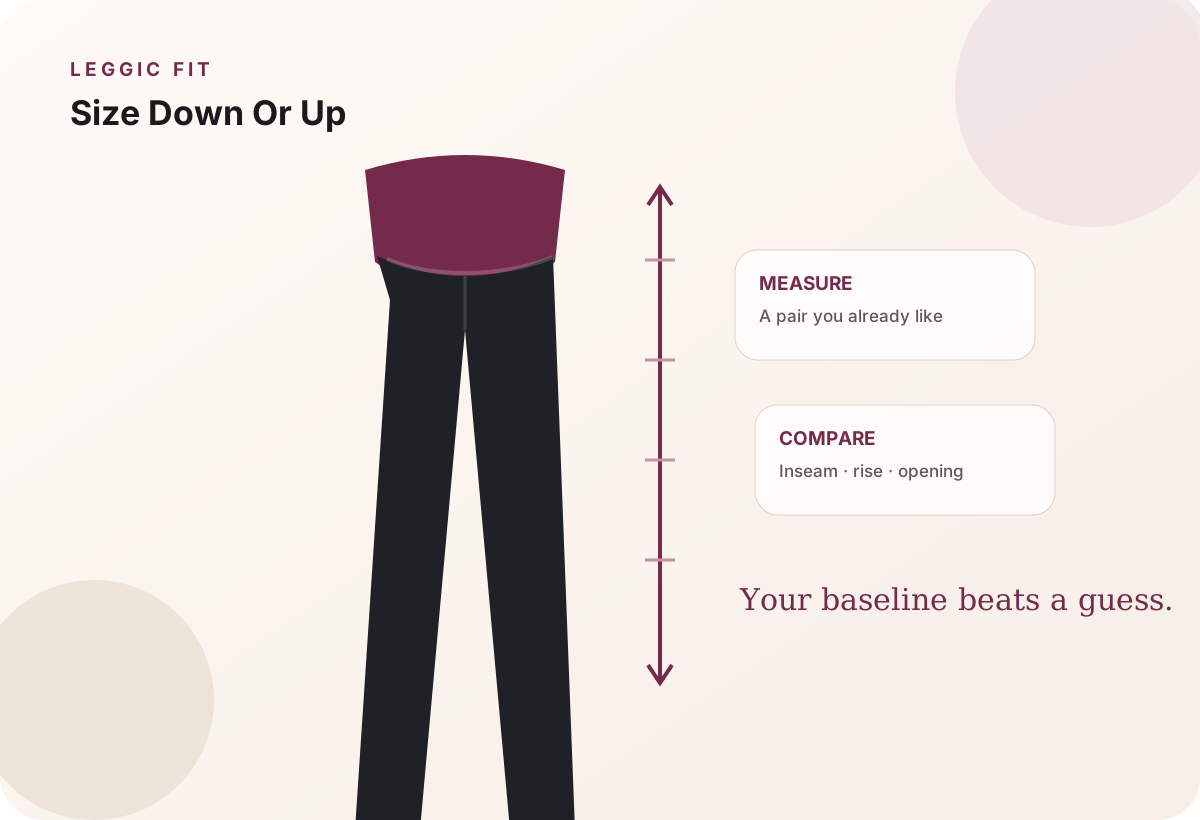
What matters
- Size down only if there is genuine excess room and seams are not under strain.
- Size up when fabric is over-stretched or pressure is excessive.
- Try a different rise or pattern when neither size solves the proportion mismatch.
Use the failure mode to choose the next test
If the waist gaps and the hips also feel loose, trying a smaller size is reasonable. If the hips are already stretched, the fabric becomes sheer or seams look strained, sizing down is moving in the wrong direction. If the waist digs while the hips fit, sizing up may relieve pressure but create sliding — a different pattern or waistband shape may be the better fix.
Signals to test a different size
- Possible size down: loose waist plus loose seat or thigh, excess folds, or the whole garment feels under-tensioned.
- Possible size up: visible over-stretch, uncomfortable pressure, seam distortion or increased sheerness.
- Possible different cut: correct hip fit but persistent waist gap, rolling, crotch pulling or rise mismatch.
Use this in practice
Compare the garment information you can verify — measurements, construction, care label and composition — with the way the pair actually behaves on your body. Avoid treating a single marketing term as a guarantee.